



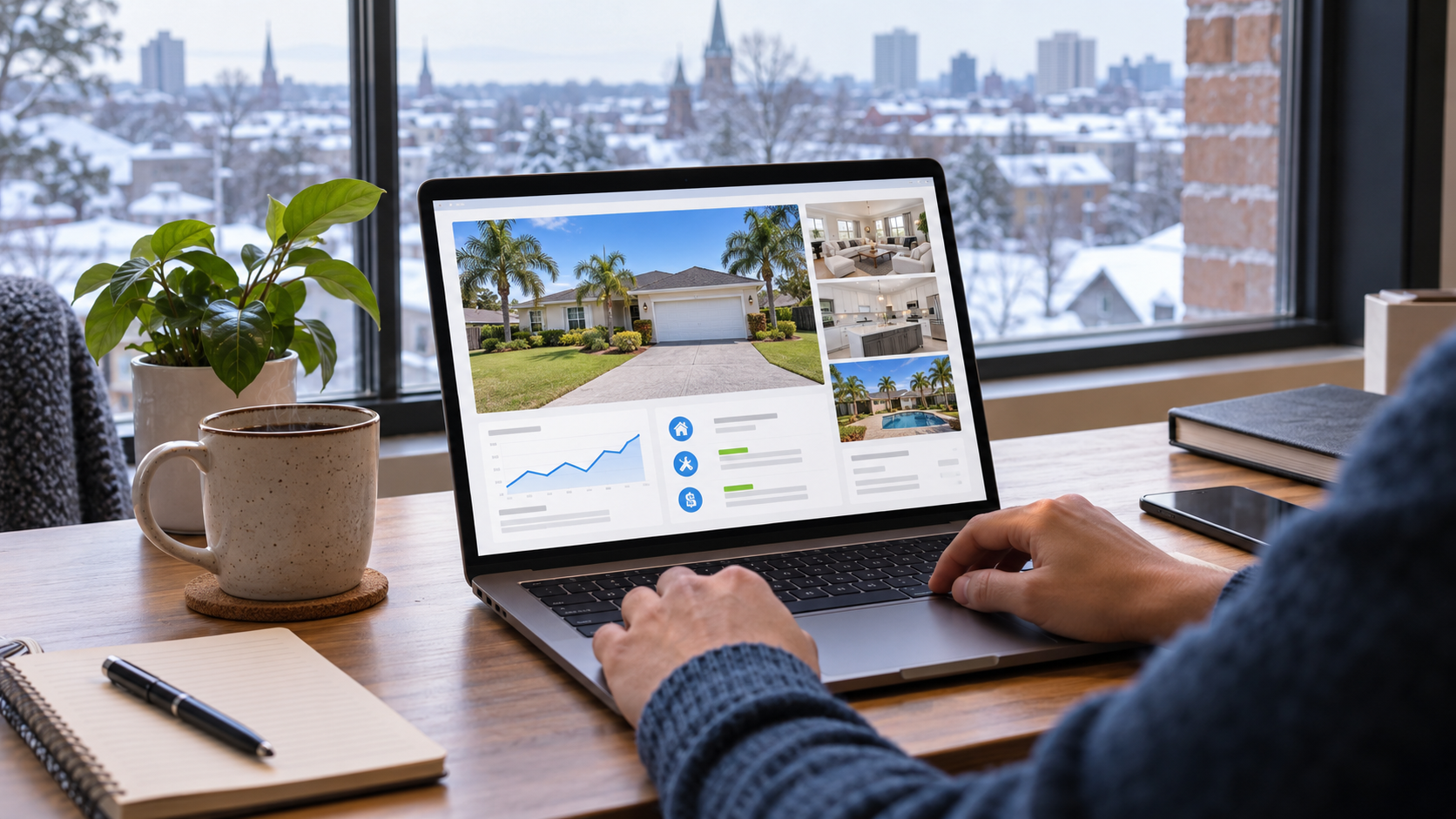
Say you've taken a job in Denver and kept your three-bedroom in Jacksonville as a rental. The tenant is settled and the rent arrives on time. Then, on a Friday night in August, your phone rings: the AC has stopped, it's 92 degrees inside, and you're more than 1,400 miles away. How that call goes depends almost entirely on what you set up before it came.
To manage a Jacksonville rental from out of state, you need someone local who can reach the property quickly, systems that let you collect rent and approve repairs online, a Florida-compliant lease, and a plan for hurricane season. Most remote owners either hire a full-service property manager or pay a manager to place the tenant and then rely on a local team of vendors for everything else.
Living far away isn't a legal problem. Florida doesn't require a landlord to live in the state. Distance is a practical problem: showings, emergency repairs, inspections and storm checks all need someone on site. This guide walks through the setup step by step, covers the Florida and tax rules out-of-state owners often miss, and shows what professional management costs for a typical Jacksonville home.
Can You Manage a Jacksonville Rental From Out of State?
Yes. Owners in other states and other countries rent out Jacksonville homes all the time, including many military families who keep their home when they receive orders. Florida law doesn't require you to live nearby or to hire a manager.
It does require the tenant to know how to reach you. Under Florida Statute §83.50, at or before the start of the tenancy you must give the tenant, in writing, the name and address of the landlord or of a person authorized to receive notices and demands for the landlord. If you live out of state, that person is often your property manager. Tell the tenant in writing whenever that contact changes.
What Has to Happen Locally (and What Can Be Done Remotely)?
Most paperwork and money now move online. The tasks that need a person at the property are the ones that cause trouble for remote owners.
Task | Can you do it remotely? | Who usually handles it on site |
|---|---|---|
Collecting rent and sending statements | Yes — online payments and an owner portal | No one needed on site |
Listing and marketing | Mostly — photos and a virtual tour need a local visit | Photographer or property manager |
Showings | Partly — virtual tours help, but most renters want to see the home | Leasing agent or property manager |
Screening and signing the lease | Yes — online applications and e-signatures | No one needed on site |
Move-in and move-out inspections | No | Property manager or a trusted local inspector |
Routine repairs | Partly — you can approve quotes remotely | Licensed local vendors, with someone to verify the work |
Emergencies (leaks, AC failure, lockouts) | No | A local contact who answers 24/7 |
Storm preparation and post-storm checks | No | Property manager or local contact |
Eviction hearings | Partly | A Florida attorney |
How to Set Up Your Jacksonville Rental for Remote Management
Work through these steps before your first tenant moves in. If the home is already rented, use them as a checklist to fill gaps.
Step 1: Choose your management model
Decide who will run the tenancy day to day. You have three realistic options: manage it yourself with a local helper, hire a manager for tenant placement only, or hire full-service management. For remote owners, the deciding factor is usually emergencies: if no one local can answer a call at 2 a.m., self-managing is risky. Our guide to self-managing vs. hiring a property manager in Jacksonville compares the three in detail.
Step 2: Build your local team
Even with a manager, know who will do the work. A remote owner's core team covers HVAC, plumbing, electrical, roofing, a handyman, lawn care, pest control and a locksmith. Ask for proof of license and insurance. If you're self-managing, line up a local contact who can let vendors in and check the property, and make sure anyone you pay to lease or manage the home holds an active Florida real estate license, which you can check on the Florida DBPR license search.
Step 3: Set up rent collection and deposit accounts
Use online rent payments so you aren't relying on mailed checks. Florida Statute §83.49 requires security deposits to be held in a separate Florida bank account (interest-bearing or not) or covered by a surety bond, never mixed with your own money. If you live out of state, open that account with a bank that has Florida branches or let your manager hold the deposit in its trust account.
Step 4: Use a Florida-compliant lease and disclosures
A generic lease from another state can miss Florida requirements. At minimum, the lease package should include:
The landlord's or authorized agent's name and address for notices (§83.50).
The security deposit disclosure, including where the deposit is held (§83.49).
A separate flood disclosure for leases of one year or longer (§83.512, in effect since October 1, 2025).
Written consent from the tenant if you want to send notices by email (§83.505).
Clear terms on who handles lawn care, filters, pest control and hurricane preparation.
Step 5: Screen and lease without being there
Online applications, third-party screening reports and e-signatures make remote leasing practical. Write down your screening criteria and apply them the same way to every applicant to stay within fair-housing rules. For showings, a 360° virtual tour helps out-of-area renters, but someone local should still show the home in person and confirm that the applicant has seen it.
Step 6: Schedule inspections and document everything
Since you can't drive by, inspections are your eyes on the property. Plan a move-in inspection with dated photos, at least one inspection during the lease and a move-out inspection. Good photos matter for deposit claims: Florida gives you 30 days after move-out to send a written claim, and you'll need evidence to support it.
Step 7: Set a repair approval limit and keep a reserve
Agree in writing on the dollar amount your manager or local contact can approve without calling you, and what counts as an emergency. Keep a cash reserve for big-ticket items like an AC replacement. In Jacksonville's climate, the air conditioning is usually the most urgent repair a tenant reports.
Step 8: Tell your insurer the home is a rental
A standard homeowner's policy usually isn't designed for a home occupied by tenants. Ask your agent about a landlord (dwelling) policy, check whether you need separate flood insurance, and ask tenants to carry renter's insurance. Keep digital copies of your policies so you can file claims from anywhere.
Florida and Tax Rules Out-of-State Owners Often Miss
Three rules catch remote owners most often: losing the homestead exemption, the six-month sales tax rule and, for owners abroad, federal withholding on rent.
Homestead exemption
If the Jacksonville home was your homestead before you moved, renting it changes that. Under Florida Statute §196.061, renting all or substantially all of a homestead counts as abandoning it. Renting it for more than 30 days per calendar year for two consecutive years affects the exemption. Losing the exemption can raise your property tax bill noticeably. There is an exception for members of the U.S. Armed Forces whose orders transfer them away; their Florida residence can be maintained. Contact the Duval County Property Appraiser before you rent the home.
Sales tax applies only to short rentals
Florida taxes residential rentals of six months or less as transient rentals, subject to state sales tax, county surtax and, in many counties, a local tourist development tax. A bona fide written lease longer than six months is generally exempt. A standard 12-month lease falls outside the tax. A short furnished rental between moves may not.
Owners who live outside the U.S.
For nonresident alien owners, the IRS says U.S. rental income is generally subject to 30% withholding on gross rent unless the owner elects to treat it as effectively connected income. Making that election means filing Form 1040-NR, providing Form W-8ECI to the payer and paying tax on net income after expenses. Talk to a cross-border tax professional before the first rent payment.
This section summarizes Florida Statutes and IRS guidance as published and is not legal or tax advice. Confirm your situation with a Florida attorney, CPA or the Duval County Property Appraiser.
How Do You Prepare a Remote Rental for Hurricane Season?
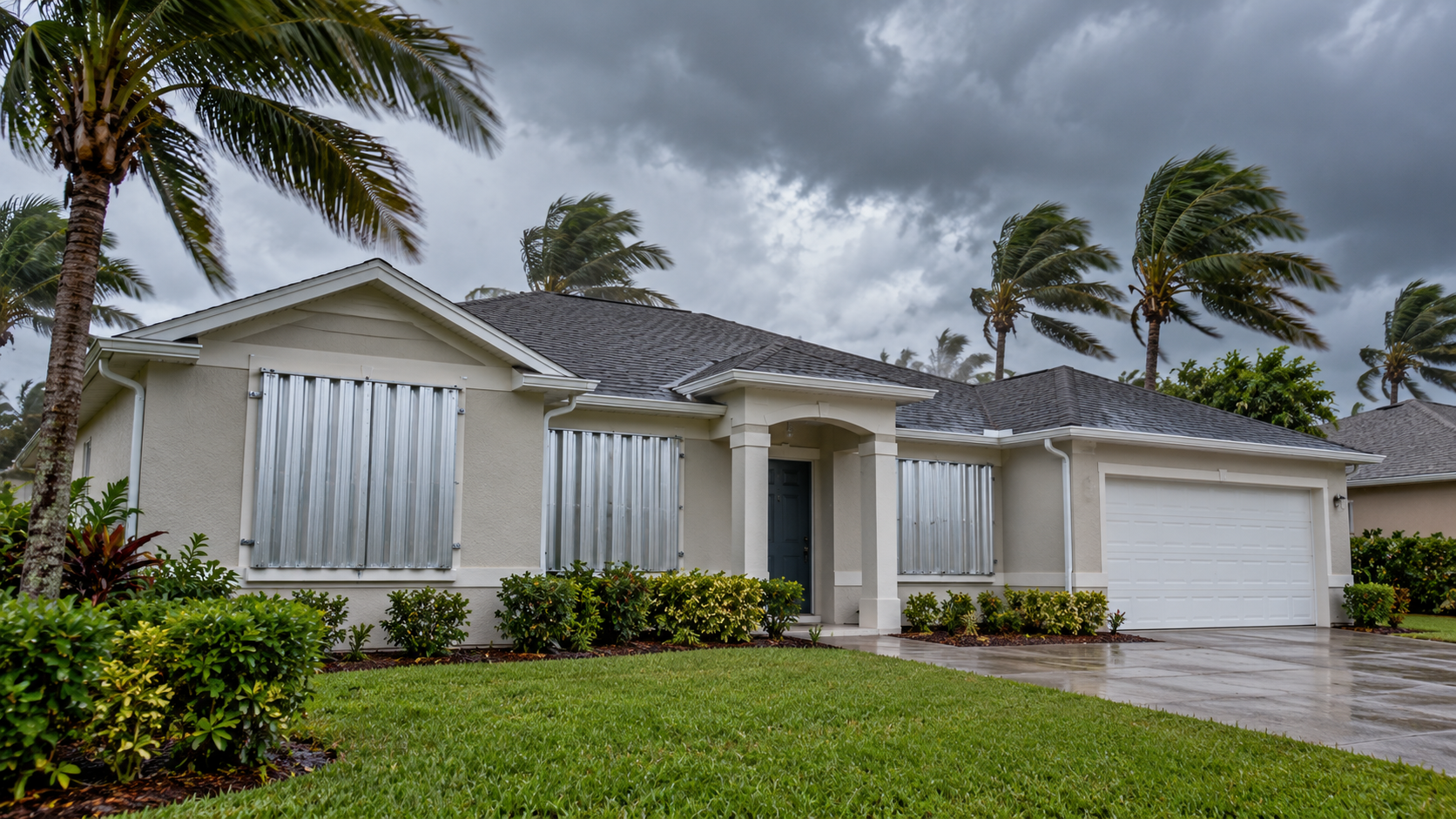
Atlantic hurricane season runs June 1 to November 30, and a remote owner needs a plan before a storm is named, not after. Jacksonville doesn't take a direct hit every year, but tropical storms and heavy rain can still cause roof leaks, fallen trees and flooding.
Go back to the Denver example. A tropical storm passes overnight, and the next morning you see photos of downed trees on the local news. If someone local already has a key, a vendor list and your OK to act, the roof is checked by afternoon. If not, you're calling contractors you've never met, competing with every other owner in the city.
When | What to do |
|---|---|
Before June 1 | Confirm insurance and flood coverage, trim trees near the roof, service the AC, and put hurricane responsibilities in writing (who secures outdoor items, who installs any shutters) |
When a storm watch is issued | Send the tenant a reminder, confirm your local contact or manager is available, and check that vendors know the address |
Within days after the storm | Have someone inspect the exterior and roof, photograph any damage, start mitigation such as water extraction or roof tarping, and contact your insurer |
If the home is vacant | Arrange regular property checks; a vacant home can sit with a leak or power outage for weeks if no one visits |
If the home will sit empty between tenants or while you decide what to do, Cool Realty's Home Watch service provides scheduled visits for vacant homes, priced separately from management.
Military Owners: Renting Your Jacksonville Home After PCS Orders
Jacksonville is home to NAS Jacksonville and Naval Station Mayport, so many out-of-state owners are service members who received orders and kept their home. Your timeline is usually set by your report date, so start the rental process as soon as orders are in hand. Two things work in your favor: Florida's homestead exception for transferred military members, and the option to have a local manager handle everything while you're deployed or stationed elsewhere. Cool Realty offers PCS property services and a 9% monthly management rate for active-duty owners.
What Does It Cost to Have a Jacksonville Rental Managed?
For a typical three-bedroom Jacksonville home, full-service management with Cool Realty would cost about $2,790 in the first year, based on its published fees. Zillow reported an average asking rent of $1,795 for a three-bedroom in Jacksonville (data updated October 22, 2026).
Option | Calculation | Illustrative first-year cost |
|---|---|---|
Full-service management | $750 onboarding + $65 lease preparation + 10% × $1,795 × 11 months | $2,789.50 |
Tenant placement only | $100 + one month's rent | $1,895 (you manage the tenancy after move-in) |
Cool Realty's published fees as of October 2026, assuming 12 months of collected rent; repairs, renewals and optional services are excluded. There is no management fee while a home is vacant. See the pricing page.
Compare that with the cost of distance: a flight to Jacksonville for a turnover or emergency, a month of vacancy ($1,795 in this example), or a repair that gets worse because no one checked it. For most remote owners, those risks are what tip the decision.
Common Mistakes Out-of-State Landlords Make
Mistake | What it costs you | Better approach |
|---|---|---|
Relying on a friend or neighbor as the only local contact | Slow emergency response and no one to enforce the lease | Use a licensed manager or a written arrangement with a backup contact |
Renting to an applicant who never saw the home | Disputes over condition and early move-outs | Require an in-person or live video showing and documented move-in photos |
Keeping the homeowner's insurance policy | A claim may be denied once the home is tenant-occupied | Switch to a landlord policy before the tenant moves in |
Skipping inspections because they're inconvenient | Small leaks and maintenance issues grow into large repairs | Schedule inspections in the lease and pay someone local to do them |
Not giving the tenant a notice address | Notices and demands go nowhere, and you may miss deadlines | Name an authorized local agent under §83.50 and update it in writing |
Forgetting the homestead exemption | A higher property tax bill | Check with the Duval County Property Appraiser before renting |
How to Choose a Jacksonville Property Manager You've Never Met
You can hire well from a distance if you ask for evidence instead of promises. Ask each company:
Who will be my day-to-day contact, and how do I reach them after hours?
What can you approve without me, and up to what dollar amount?
How often do you inspect, and will I get photos?
How do you handle a hurricane watch and post-storm checks?
Can I see a sample owner statement and management agreement?
What fees apply at placement, renewal and if I end the agreement?
Which Florida licensee is responsible for the account?
Video calls make it easy to meet the team. For more questions to compare companies, see how to choose a property management company in Jacksonville.
Frequently Asked Questions
Do I need a property manager if I live out of state?
Florida doesn't require one, but someone local has to handle showings, emergencies, inspections and storm checks. Most remote owners hire a manager or at least a tenant-placement service plus a reliable local contact.
Can I collect rent from out of state?
Yes. Online rent payments and an owner portal let you collect rent and track expenses from anywhere. Security deposits still have to be held in a Florida bank account or covered by a surety bond.
Who does my tenant contact if something breaks?
Whoever you name in writing as your authorized agent under Florida Statute §83.50, usually your property manager. Give the tenant an emergency number that is answered around the clock.
Will I lose my homestead exemption if I rent my Jacksonville home?
Possibly. Renting a homestead for more than 30 days per calendar year for two consecutive years can end the exemption, with an exception for transferred military members. Confirm with the Duval County Property Appraiser.
How do I handle an eviction from another state?
Florida evictions start with a correct written notice under §83.56 and, if needed, a court case in the county where the property sits. A local property manager can serve notices and coordinate with an attorney, so you usually don't need to travel.
Final Thoughts
Think back to that Friday-night AC call. With a local manager or team in place, it ends with a text: a technician is on the way, here's the quote, approve? Without one, it's a weekend of phone calls from Denver. Managing a Jacksonville rental from out of state comes down to one question: who is there when something happens at the property? Answer that first with a manager, a local team or both. Then set up online rent collection, a Florida-compliant lease, regular inspections and a hurricane plan, and the distance becomes much easier to manage.
Own a Jacksonville rental but live somewhere else? Cool Realty's Jacksonville property management service gives remote owners one assigned property manager, an online owner portal and owner approval on repair quotes. Request a free rental analysis to see what your home could rent for and how management would work from where you live.