



By Cool Realty LLC Editorial Team | Updated for 2027 | Statutes and company details checked November 19, 2026
In a Florida rental, the owner must keep the home's structure and plumbing in repair, and the lease decides most other repairs. Under §83.51(1), a landlord must follow applicable building, housing and health codes or, where none apply, keep the roof, windows, doors, floors, steps, porches, exterior walls, foundation and other structural components in good repair and the plumbing in reasonable working condition. For a single-family home or duplex, the lease may change those duties in writing. Damage the tenant causes is generally the tenant's responsibility.
If an owner doesn't fix a covered problem, the tenant must give written notice and wait 7 days before ending the lease (§83.56(1)) or withholding rent as a defense (§83.60(1)(b)). A manager who receives repair requests is usually the person who has to answer them within that window.
Most rental repair questions come down to three things: what the law requires, what your lease says and who is on the phone at 9 p.m. when the water heater fails. This guide covers all three for Jacksonville-area owners, with the statute text checked on November 19, 2026. It is general information, not legal advice.
Want repairs handled without the phone calls? Cool Realty coordinates maintenance for Jacksonville-area rentals. See our maintenance services page or call (904) 602-5555.
Disclosure: this guide is published by Cool Realty LLC, a Jacksonville-area property manager that offers maintenance coordination. Legal and cost information comes from the sources listed at the end.
Who Pays for Repairs in a Florida Rental?
Usually the owner pays for repairs to the structure, plumbing and systems the law requires, and the tenant pays for damage they or their guests cause. Everything in between depends on the written lease. The table shows how that works in practice for a typical single-family rental.
| Repair or issue | Usually responsible | Why |
|---|---|---|
| Roof leak, damaged windows, doors, floors, steps, porches, exterior walls, foundation | Owner | Structural components under §83.51(1) |
| Plumbing that no longer works (burst or leaking pipe, no running water from a failed fixture line) | Owner | Plumbing must be in reasonable working condition, §83.51(1) |
| Damage from tenant negligence or a guest (a hole in a wall, broken door from forced entry, flood from a left-open tap) | Tenant | §83.51(4): landlord not responsible for conditions caused by the tenant's or a guest's negligent or wrongful act |
| Working smoke detectors at move-in (single-family home or duplex) | Owner | §83.51(2) applies at the start of the tenancy unless the lease says otherwise |
| Air conditioning | Depends on lease and local code | The statute doesn't name A/C. State the owner's duty, response time and filter responsibility in the lease |
| Pest control, locks, garbage service in a single-family home | Depends on lease | The statute's extra duties for pests and locks apply to units other than single-family homes and duplexes, unless agreed in writing |
| Lawn care, filters, light bulbs, minor upkeep | Whatever the lease assigns | Not set by statute; put it in writing |
Source: Florida Statutes §83.51 (2025), Florida Senate. Rules change and the lease controls; confirm with an attorney for a specific dispute.
What repairs are landlords responsible for in Florida?
The core duty is in §83.51(1). Throughout the tenancy, the landlord must either comply with applicable building, housing and health codes or, where there are none, keep the roof, windows, doors, floors, steps, porches, exterior walls, foundation and other structural components in good repair, capable of resisting normal forces and loads, and keep plumbing in reasonable working condition. Screens must be in reasonable condition when the tenancy starts, and the landlord repairs screen damage once a year when needed.
Why a single-family home is different from an apartment
For a single-family home or duplex, §83.51(1) allows the duties to be altered or modified in writing. The longer list in §83.51(2), which covers extermination, locks and keys, clean common areas, garbage removal and heat and water, applies to dwelling units other than single-family homes and duplexes unless the parties agree otherwise in writing. Single-family and duplex rentals get a smoke detector duty instead.
What this means for owners: because Cool Realty manages individually owned houses, townhomes and condos rather than apartment complexes, the lease is where most repair responsibility is actually set. Vague wording like "tenant maintains the property" creates disputes. Name who pays for pest control, A/C service, filters, lawn care and small repairs, and set a dollar limit under which the tenant handles minor fixes.
What counts as a repair, and what counts as an improvement?
A repair restores something that is broken or worn to working condition, such as replacing a leaking supply line, a failed capacitor or a damaged door. Maintenance is routine upkeep that prevents breakdowns, such as changing filters or servicing the A/C. An improvement adds value or changes the property, such as a new kitchen. The labels matter for the lease, your budget and how your tax professional treats the expense, so keep invoices that say what was done.
Our guides to pet damage and fees and the first 30 days after buying a rental cover related situations.
What Happens If an Owner Doesn't Make Repairs in Florida?
The tenant must put the problem in writing and give the landlord 7 days to fix it before using a legal remedy. Florida doesn't set a fixed number of days to complete every repair, so how fast a manager responds matters more than most owners expect.
- Tenant sends written notice. Under §83.56(1), if the landlord materially fails to comply with §83.51(1) (or material lease terms), the tenant gives written notice that specifies the problem and says the tenant intends to terminate.
- The landlord has 7 days from delivery to fix it. If the problem isn't corrected within 7 days, the tenant may terminate the rental agreement.
- Causes outside the landlord's control are handled differently. If the problem is beyond the landlord's control and the landlord is making every reasonable effort, the parties may end the agreement. If the unit is untenantable and the tenant moves out, no rent is owed for that period. If it stays livable and the tenant stays, rent is reduced in proportion to the lost rental value.
Can a tenant legally withhold rent for repairs in Florida?
Only in a narrow way. A tenant who stops paying rent is still exposed to a 3-day notice for nonpayment (§83.56(3), excluding Saturdays, Sundays and court-observed legal holidays). In a later eviction for nonpayment, §83.60(1)(b) allows a tenant to use a material failure to comply with §83.51(1) as a defense, but only if the tenant first gave written notice identifying the problem and stating that rent will be withheld, and 7 days passed. That notice may go to the landlord, the landlord's designated representative, a resident manager or whoever collects rent for the landlord. If the defense succeeds, the court or jury decides how much to reduce the rent. Under §83.60(2), a tenant raising a defense other than payment generally must also pay the disputed rent into the court registry, or the defense can be waived.
Why this matters for owners: the statute lets the tenant's written notice go to the landlord, a designated representative or whoever collects rent for the landlord, so a formal notice sent to your manager can reach you legally. If it sits for a week, a $200 repair can become a rent dispute. Put a response time in your management agreement, and expect an owner statement that shows when each request came in and when it was closed.
The eviction process itself is covered in our Duval County eviction guide.
How Much Notice Does a Landlord Need Before Entering to Make Repairs?
At least 24 hours' notice, with entry between 7:30 a.m. and 8:00 p.m. That's the "reasonable notice" and "reasonable time" §83.53 sets for repair entry. A tenant may not unreasonably withhold consent to entry for necessary or agreed repairs.
| Situation | What §83.53 allows |
|---|---|
| Scheduled repair | Reasonable notice (at least 24 hours) and entry between 7:30 a.m. and 8:00 p.m. |
| Emergency | Entry allowed in an emergency |
| Protecting the property | Landlord may enter at any time for the protection or preservation of the premises |
| Tenant refuses consent unreasonably | Entry is allowed under the statute, though a manager should document the refusal first |
| Tenant absent for half the rent period or more | Entry allowed, with limits if rent is current and the tenant gave notice of the absence |
| General limit | The landlord may not abuse the right of access or use it to harass the tenant |
Source: Florida Statutes §83.53 (2025). Your lease may add notice terms.
How Much Should an Owner Budget for Rental Repairs?
There is no official average for Jacksonville, and a number from a national landlord blog won't predict your house. Rules of thumb circulate widely, such as setting aside a percentage of the home's value, a dollar amount per square foot or a share of rent, and they come from landlord-education sites rather than audited local data. Use them as a starting reserve and replace them with your own records after the first year.
A simple way to build your reserve:
- List the big systems and their ages. Roof, A/C, water heater and appliances are the repairs most likely to be large. Ask the inspector or your manager for each one's age and condition.
- Add last year's repair invoices if you owned the home before, or use the move-in inspection report as the starting baseline.
- Pick a monthly reserve and hold it. On a $2,000 rent, setting aside 5% is $100 a month ($1,200 a year) and 10% is $200 a month ($2,400 a year). That's arithmetic only, not a prediction of what you'll spend.
- Set an owner approval limit (see below) so small repairs don't wait for you and large ones don't happen without you.
What is the 50% rule for rental property?
It's an informal investor shortcut that assumes operating costs, including repairs, vacancy, insurance and taxes but not the mortgage, will take about half of the rent. It isn't a law or a repair budget, and real expenses vary by home. Use it only for a quick first screen, then build a real number from the property's age, condition and records.
To see how repair coordination fits into a management fee, read our guide to what property management costs in Jacksonville.
How Does a Property Manager Handle Repairs?
A manager receives the request, decides how urgent it is, gets the work done within the limits in your agreement and reports it to you. The steps below describe what a well-run process looks like; ask any company, including us, to show how its own version works.
- Request comes in. The tenant reports the problem by phone, email or portal, ideally with a photo.
- Triage. Emergencies (active water leak, no safe way to cook or sleep, gas smell, fire or electrical hazard) go out immediately. Routine items are scheduled.
- Check the approval limit. Below the dollar limit in your agreement, the manager orders the work. Above it, the manager gets your approval first, except in an emergency.
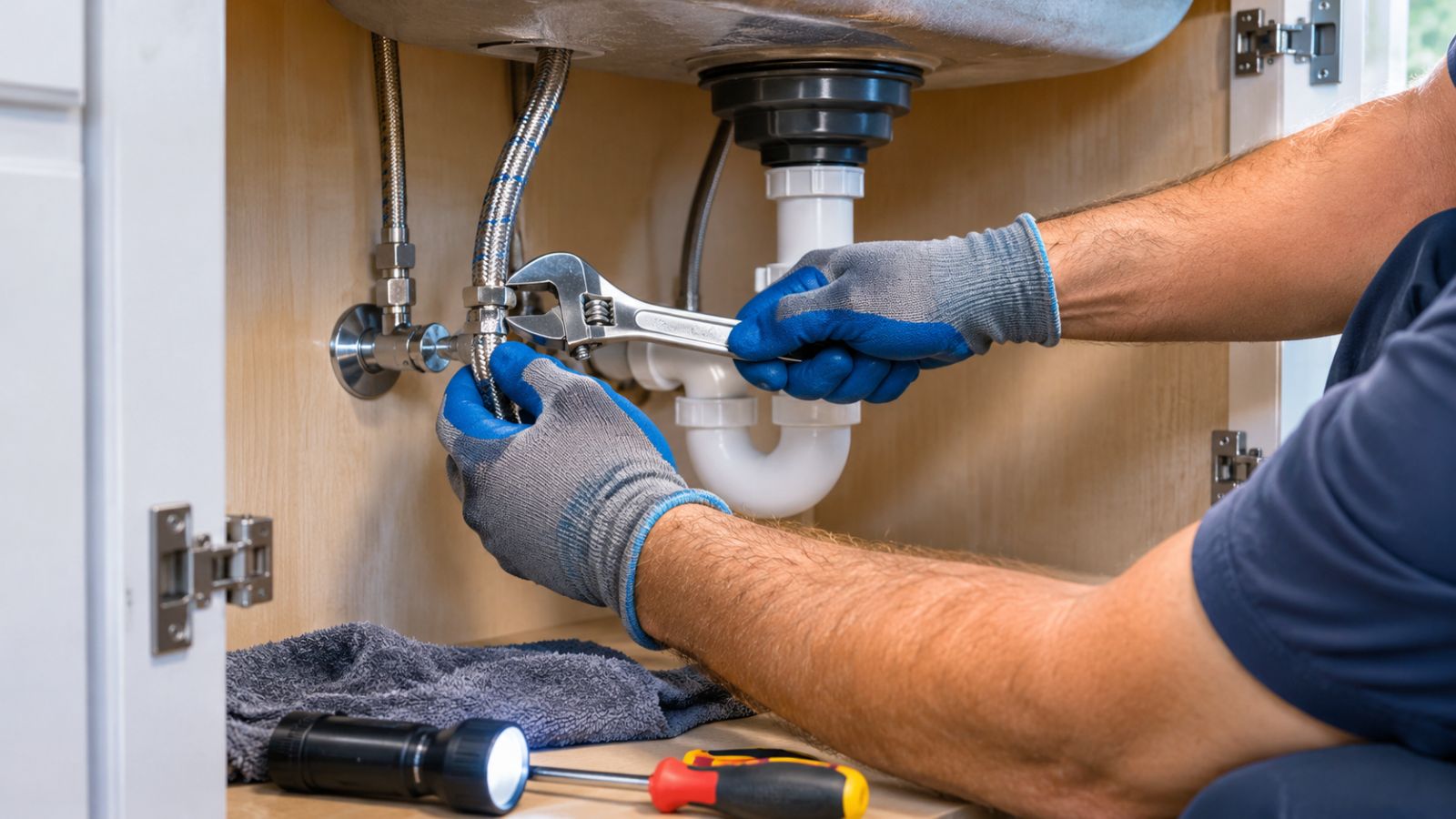
- A vendor does the work. The manager schedules a vendor and gives the tenant the 24-hour entry notice that §83.53 requires for repairs.
- Close-out. The manager confirms the fix, keeps the invoice and posts it to your owner statement. For tenant-caused damage, photos from move-in and the inspections decide who pays.
Questions to ask about repair handling before you hire
| Ask | What a good answer includes |
|---|---|
| What's my approval limit, and who sets it? | A dollar amount written in the agreement, with emergencies excepted |
| Do you mark up vendor invoices? | A direct yes or no, and the amount if yes. Cool Realty's published hourly rate for its in-house handyman is $50 plus materials |
| Who are your vendors, and do you check licenses and insurance? | A vetting process, not just a list of names |
| How do tenants report problems, and how fast do you respond? | A named channel and a target time, for routine and emergency requests |
| Will I see photos and invoices? | Yes, on the owner statement or portal |
| Who covers the repair when the tenant caused it? | A process for documenting damage and charging the tenant under the lease and the deposit rules |
What Cool Realty publishes: its pricing page lists periodic inspections, 24-hour emergency on-call coverage and online portals, and its maintenance page says the company supervises vendors for work like electrical, HVAC and plumbing. Its in-house handyman is $50 an hour plus materials. See the full pricing and maintenance services pages.
Which Repairs Are Emergencies and Which Can Wait?
Treat anything that threatens safety, health or the structure as an emergency, and schedule the rest. Neither Florida law nor most leases list every emergency, so write your own list into the lease or management agreement. A typical triage looks like this:
| Treat as an emergency | Schedule within a few days | Can wait for the next visit |
|---|---|---|
| Active water leak or burst pipe; gas smell; fire or electrical hazard; no working lock on an exterior door; sewage backup | A/C or heat not working (in a Jacksonville summer, treat A/C as urgent); no hot water; a failed major appliance; a leak that isn't actively spreading | A dripping faucet; a cosmetic crack; a sticking door; a loose cabinet hinge; a burnt-out bulb |
This triage is a practical suggestion, not a legal standard. The lease and management agreement should define emergencies and response times.
How Can You Prevent Expensive Rental Repairs?
Catch small problems early through inspections and a short seasonal routine. Cool Realty's inspection schedule includes a move-in inspection, a 6-month inspection, a pre-renewal inspection and a move-out inspection, which gives you dated photos and notes to compare.
- Filters and A/C: require or provide regular filter changes as the equipment maker recommends, and have the A/C serviced before the hottest months.
- Leaks: look under sinks, around toilets and at the water heater at every inspection; a slow leak found early is cheaper than a ruined floor.
- Roof and gutters: check for visible damage after major storms, since Jacksonville sits in hurricane country.
- Smoke detectors: confirm they work at move-in, which §83.51(2) requires for single-family and duplex rentals unless the lease says otherwise.
- Vacant homes: a vacant house still needs eyes on it. Cool Realty's optional home watch service is $300 a month for vacant, seasonal or absentee-owned properties.
What Mistakes Make Rental Repairs More Expensive?
| Mistake | What happens | Better approach |
|---|---|---|
| No written approval limit | Small repairs wait for the owner, or large ones happen without approval | Put a dollar limit and an emergency exception in the agreement |
| Verbal repair promises | Nobody can prove who agreed to what | Keep requests and approvals in writing or the portal |
| Ignoring a small leak | Water damage spreads and a minor fix becomes a major one | Treat any active leak as urgent and shut off the water if needed |
| Assuming the tenant pays for A/C or pests | A dispute when the lease is silent | State responsibility for each in the lease |
| Charging a tenant without evidence | The deposit claim is hard to defend | Use dated move-in photos and inspection reports, and follow §83.49 deposit timelines |
| Choosing the cheapest vendor without checking | Poor work and repeat callouts | Ask about license, insurance and warranty on the work |
Frequently Asked Questions
What are my rights if my landlord is not making repairs in Florida?
A tenant must give written notice of the problem and, if the landlord materially fails to comply with §83.51(1) and doesn't fix it within 7 days, may terminate the lease under §83.56(1). A tenant who plans to withhold rent should also read §83.60 and talk to an attorney first.
Can a tenant legally withhold rent for repairs in Florida?
Withholding is risky. §83.60(1)(b) allows a failure to maintain as a defense in an eviction for nonpayment only after written notice and 7 days, and the tenant may need to pay the disputed rent into the court registry under §83.60(2).
What repairs are landlords responsible for in Florida?
Structural components and plumbing, and code compliance, under §83.51(1). For single-family homes and duplexes the duties can be modified in writing, and smoke detectors must work at move-in unless the lease says otherwise.
Who pays for pest control in a Jacksonville rental house?
The lease decides. The statute's extra extermination duty applies to units other than single-family homes and duplexes unless agreed in writing, so name the responsible party in the lease.
How fast must a landlord make a repair?
Florida law gives a 7-day written-notice period before a tenant can end the lease for a covered failure, but it doesn't set a standard repair deadline. Put response times in the lease.
Can a landlord enter without notice to make a repair?
Only in an emergency or to protect the premises. Otherwise §83.53 calls for at least 24 hours' notice, with entry between 7:30 a.m. and 8:00 p.m.
What is the average maintenance cost for a rental property?
There is no reliable official average. Guidelines vary, so start with a reserve based on the home's age and systems, then adjust with real invoices.
Getting Repairs Under Control
Decide who pays for what in writing, set an approval limit, and make sure someone answers repair requests quickly, because the statute's 7-day clock starts when the written notice is delivered. A reserve and four inspections a year do more to hold repair costs down than any single vendor choice.
Own a rental in the Jacksonville area? Review our maintenance services, compare the pricing and call Cool Realty LLC at (904) 602-5555 to talk through your property.
Sources
- Florida Statutes §83.51 (landlord's obligation to maintain premises), §83.53 (landlord's access), §83.56 (termination of rental agreement) and §83.60 (defenses to action for possession) — Florida Legislature, 2025 statutes, checked Nov. 19, 2026.
- Cool Realty LLC — pricing page (in-house handyman rate, inspections, 24-hour emergency on-call, home watch service) and maintenance services page, checked Nov. 19, 2026.
- Google Search related searches and People Also Ask for "rental property repairs jacksonville fl," "who pays for repairs in a rental property florida" and "rental property maintenance costs for landlords," observed Nov. 19, 2026.